Cased crossings — road, rail, and river crossings — hide the carrier pipe inside a steel casing. Trapped moisture and shorted casings can defeat cathodic protection at exactly the point where inspection is hardest to do. The Falcon monitors what's happening inside the casing without excavating.
A shorted or flooded casing can mask a failing carrier pipe from the rest of a CP program for years, because the casing itself is rarely instrumented. The Falcon installs at the crossing and reports on conditions inside the annular space continuously.
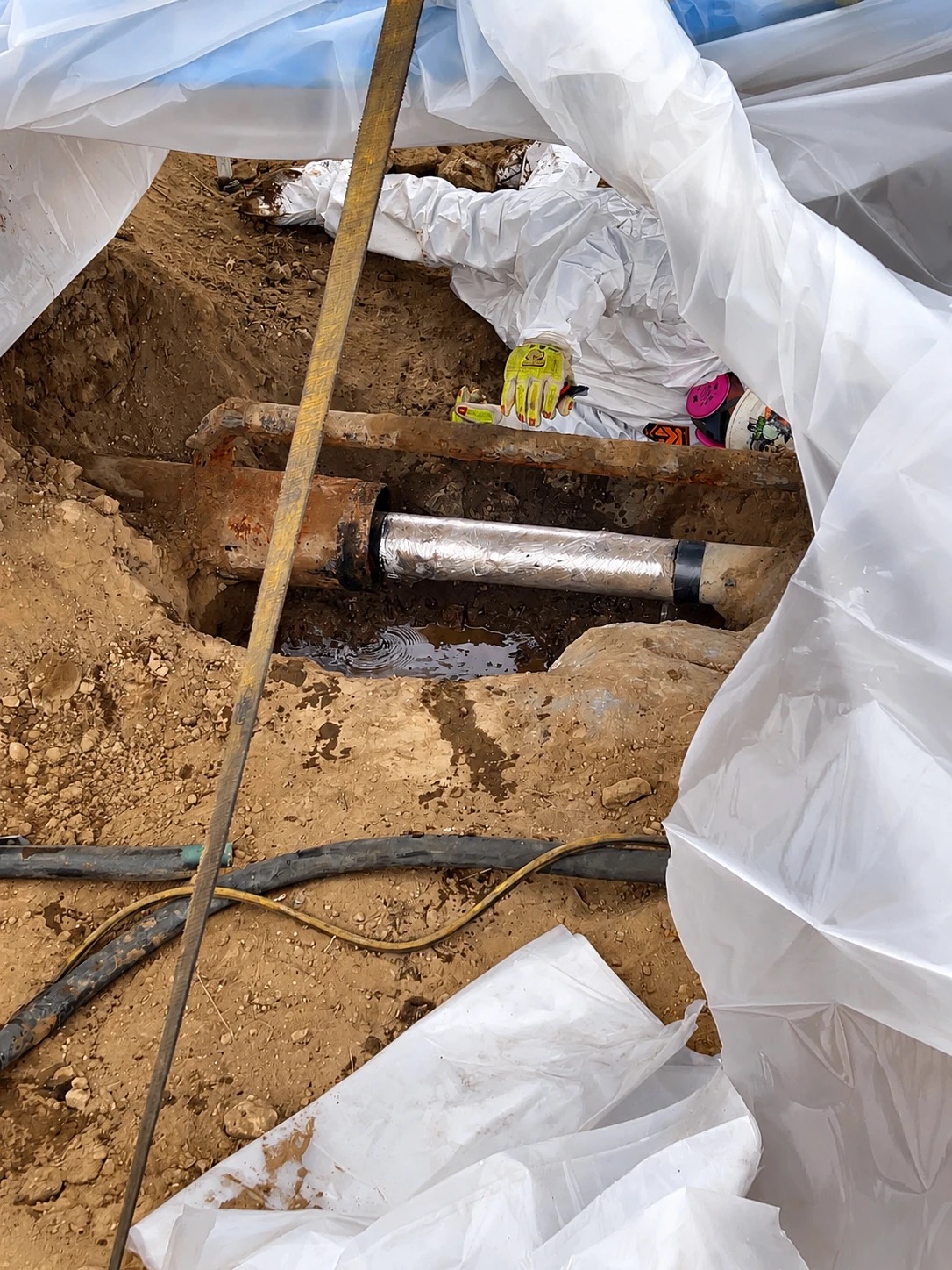
Casing repair — this is the condition the Falcon is built to monitor for, before it gets this far.
This is what a compromised casing crossing actually looks like once it's excavated — trapped moisture, a coupling under strain, a repair that could have been flagged months earlier.
The Falcon's whole job is making sure a crew never has to find out this way.
The Falcon is sized and mounted specifically for the confined, hard-to-access space inside a casing.
Sized and mounted for the confined annular space between the carrier pipe and casing.
Identifies trapped water and electrolyte accumulation before it drives internal corrosion at the crossing.
Flags electrical shorts between the carrier pipe and casing that can defeat cathodic protection.
Tell us about the crossing — we'll show you what's actually happening inside the casing.